
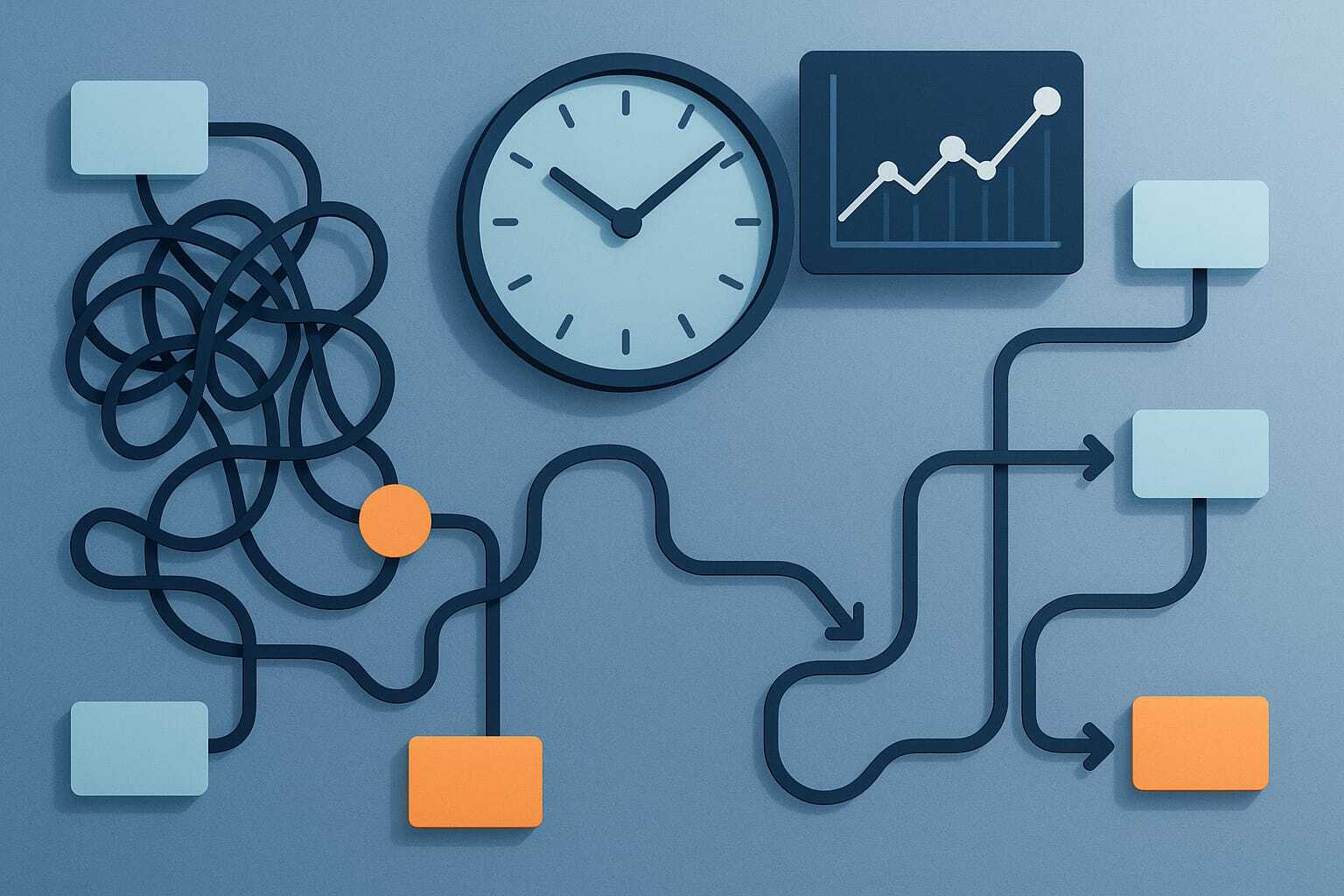
Scaling a startup is exciting—but it’s also chaotic.
In the early days, teams move fast, wear multiple hats, and rely heavily on intuition. Decisions are quick, communication is informal, and visibility comes naturally because everyone is closely involved in the work.
But as the team grows, that clarity starts to fade.
Suddenly:
- Projects take longer than expected
- Workloads become uneven
- Communication breaks down
- Productivity becomes harder to measure
What worked for a team of 5 doesn’t work for a team of 50.
This is where time visibility becomes essential.
Not as a control mechanism—but as a foundation for smarter scaling.
What Is Time Visibility?
Time visibility is the ability to clearly understand how time is spent across:
- People
- Projects
- Tasks
It goes beyond simple time tracking.
It answers questions like:
- Where is our team’s time actually going?
- Which projects consume the most resources?
- Who is overloaded—and who has capacity?
- Where are we losing time due to inefficiencies?
In a scaling startup, these insights are critical.
Because as complexity increases, assumptions become less reliable—and data becomes more valuable.
Why Startups Struggle Without Time Visibility
In early-stage startups, lack of structure isn’t a problem—it’s often a strength.
But as the company grows, that same lack of structure can lead to serious issues.
1. Work Becomes Invisible
When teams are small, everyone knows what everyone else is doing.
As teams grow, that visibility disappears.
Without time visibility:
- Managers don’t know where effort is being spent
- Founders lose insight into team productivity
- Teams operate in silos
This creates misalignment and slows down execution.
2. Scaling Amplifies Inefficiencies
Every inefficiency gets multiplied as the team grows.
A small delay in a process becomes a major bottleneck at scale.
Without time data, it’s difficult to identify:
- Repetitive tasks
- Slow workflows
- Unnecessary steps
What was once manageable quickly becomes costly.
3. Hiring Decisions Lack Data
Startups often hire based on feeling:
- “We’re too busy—we need more people”
But without time visibility, it’s hard to know:
- Whether the team is truly at capacity
- Where additional resources are needed
- If inefficiencies are the real problem
This can lead to overhiring—or hiring for the wrong roles.
4. Burnout Goes Unnoticed
In fast-growing startups, long hours are often normalized.
But without visibility into workloads:
- Some employees become overloaded
- Others remain underutilized
- Burnout creeps in silently
By the time it’s noticed, it’s often too late.
How Time Visibility Enables Smarter Scaling
Time visibility doesn’t slow startups down—it helps them grow faster and smarter.
Here’s how.
1. Better Resource Allocation
With clear insights into how time is spent, leaders can:
- Allocate work more effectively
- Balance workloads across the team
- Ensure the right people are working on the right tasks
This improves efficiency without increasing headcount.
2. Data-Driven Hiring Decisions
Instead of guessing when to hire, startups can use time data to:
- Identify capacity gaps
- Understand which roles are overloaded
- Justify hiring decisions with real data
This leads to smarter, more strategic growth.
3. Improved Project Planning
Time visibility provides historical data on how long tasks and projects actually take.
This helps teams:
- Set realistic timelines
- Avoid overpromising
- Plan more accurately
As a result, projects run smoother—and expectations are better managed.
4. Faster Process Optimization
With time data, inefficiencies become visible.
Startups can quickly identify:
- Bottlenecks in workflows
- Time-consuming manual tasks
- Areas where automation is needed
This allows for continuous improvement—even as the company grows.
5. Preventing Burnout at Scale
Time visibility makes workload imbalances visible early.
Managers can:
- Spot employees working excessive hours
- Redistribute tasks proactively
- Ensure sustainable workloads
This creates a healthier, more resilient team.
Time Visibility vs. Micromanagement
One of the biggest concerns around time visibility is that it can feel like micromanagement.
But there’s a clear distinction.
Micromanagement focuses on controlling people. Time visibility focuses on understanding work.
When implemented correctly, time visibility:
- Empowers teams with data
- Builds trust through transparency
- Supports better decision-making
The key is how it’s positioned.
It should never be about tracking every minute—it should be about gaining insights that help everyone work better.
Building Time Visibility Into Your Startup
You don’t need complex systems to get started.
Here’s how to introduce time visibility effectively.
1. Start Simple
Begin by tracking time at a high level:
- Projects
- Key tasks
- Major activities
Avoid overcomplicating things early on.
2. Focus on Insights, Not Surveillance
Make it clear to your team:
- Time data is used to improve processes—not monitor individuals
- The goal is to reduce inefficiencies and support better work
Transparency is essential for adoption.
3. Share What You Learn
Don’t keep time data locked away.
Share insights with the team:
- Where time is being spent
- What’s working well
- What needs improvement
This creates alignment and encourages collaboration.
4. Use Data to Drive Action
Time visibility is only valuable if it leads to change.
Use insights to:
- Improve workflows
- Adjust priorities
- Rebalance workloads
Turn data into decisions.
5. Scale Your Systems as You Grow
As your startup grows, your approach to time visibility should evolve.
What works for 10 people won’t work for 100.
Invest in tools and processes that can scale with your team.
Common Mistakes to Avoid
As you implement time visibility, watch out for these pitfalls:
1. Tracking Too Much Detail
This can overwhelm employees and reduce adoption.
2. Ignoring the Human Element
Data should support people—not replace conversations.
3. Failing to Act on Insights
Collecting data without using it defeats the purpose.
4. Treating Time as the Only Metric
Combine time data with outcomes and performance metrics.
Why Time Visibility Is a Competitive Advantage
In fast-growing startups, speed is everything.
But speed without clarity leads to chaos.
Time visibility provides the clarity needed to:
- Scale efficiently
- Make better decisions
- Avoid costly mistakes
- Build sustainable systems
Startups that embrace time visibility early are better equipped to handle growth—without losing control.
Final Thoughts: Scaling with Clarity
Scaling a startup isn’t just about growing faster—it’s about growing smarter.
Time visibility gives you the insights needed to:
- Understand how work happens
- Optimize processes
- Support your team
- Make data-driven decisions
It turns complexity into clarity—and chaos into structure.
And in the journey from startup to scale-up, that clarity makes all the difference.
Ready to scale your team with confidence? With Time Bot, you gain real-time visibility into how your team works—helping you optimize resources, prevent burnout, and grow smarter every step of the way.



 Work Smarter, Not Harder: Using Time Data to Improve Processes