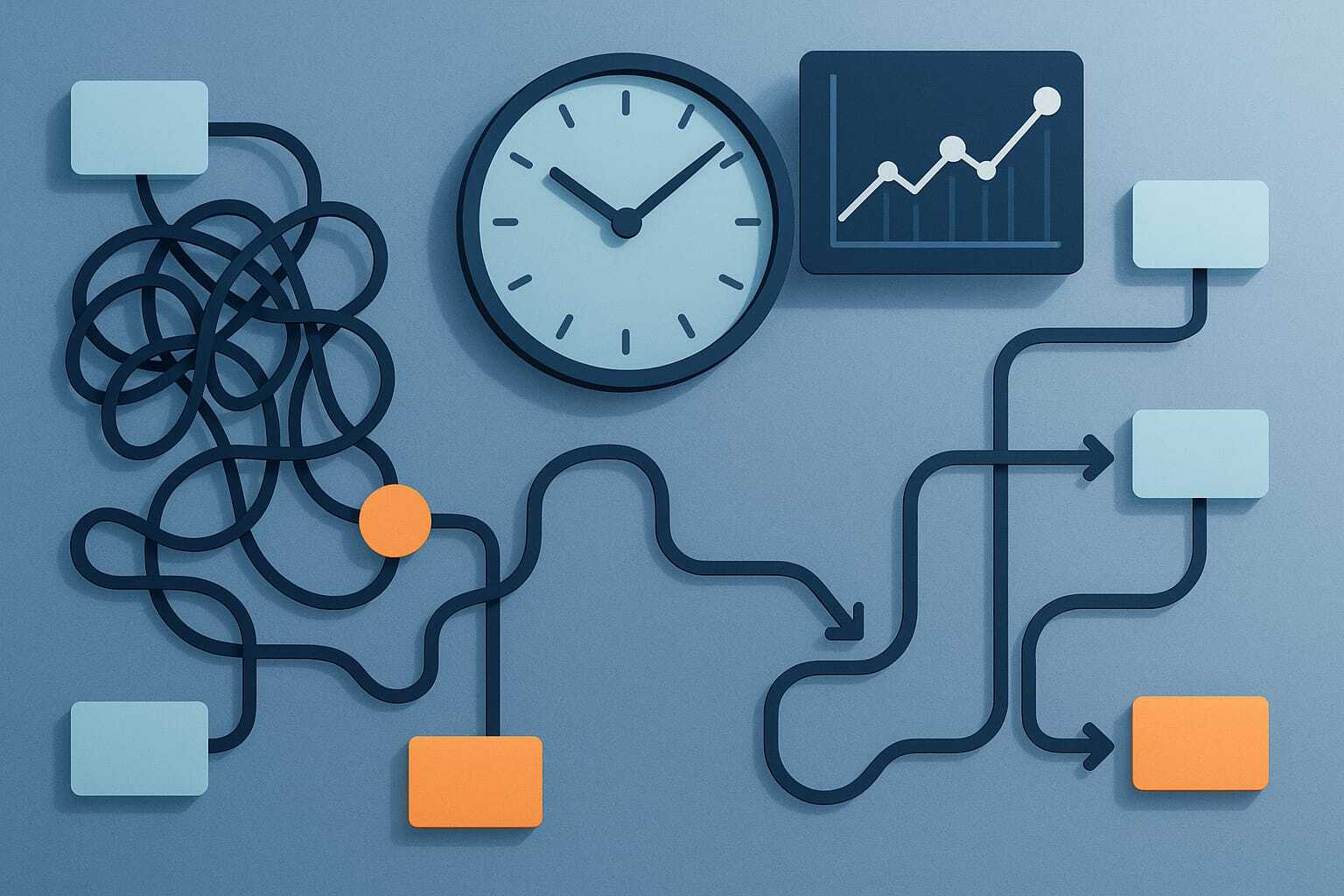

“Work smarter, not harder” is one of the most repeated phrases in the modern workplace—but what does it actually mean in practice?
For many teams, it remains just that: a phrase. Employees are still overloaded, processes are still inefficient, and productivity still depends too heavily on working longer hours.
The missing piece? Data.
More specifically, time data.
When used correctly, time data provides a clear, objective view of how work actually happens. It reveals inefficiencies, highlights bottlenecks, and uncovers opportunities for improvement that would otherwise go unnoticed.
In short, it transforms guesswork into strategy.
Let’s explore how organizations can use time data to improve processes, boost productivity, and truly work smarter—not harder.
Why Working Harder Isn’t the Answer
For years, productivity was associated with effort:
- More hours
- More tasks
- More output
But this approach has limits—and consequences.
Research consistently shows that productivity declines after a certain number of working hours. Fatigue sets in, mistakes increase, and overall efficiency drops.
Even more concerning:
- Employees spend a significant portion of their day on low-value tasks
- Context switching reduces productivity by up to 40%
- Burnout continues to rise across industries
Working harder doesn’t solve these problems. It often makes them worse.
The real solution lies in optimizing how work is done—and that starts with understanding how time is used.
What Is Time Data (and Why It Matters)?
Time data refers to insights gathered from tracking how time is spent across tasks, projects, and activities.
But it’s not just about logging hours.
It’s about understanding:
- Where time goes
- How long tasks actually take
- Where inefficiencies exist
- How workloads are distributed
Without time data, organizations rely on assumptions:
- “This task should only take an hour”
- “That team seems overloaded”
- “We’re probably spending too much time in meetings”
With time data, these assumptions become measurable realities.
The Hidden Inefficiencies Most Teams Miss
One of the biggest benefits of time data is its ability to expose what’s not working.
Here are some of the most common inefficiencies it reveals:
1. Time Drain from Low-Value Tasks
Administrative work, status updates, and unnecessary meetings often consume a large portion of the workday.
Many teams underestimate just how much time is spent on:
- Internal communication
- Repetitive manual tasks
- Non-essential activities
Time data makes these hidden costs visible.
2. Bottlenecks in Workflows
When projects slow down, it’s not always obvious why.
Time tracking can highlight:
- Tasks that consistently take longer than expected
- Stages where work gets stuck
- Dependencies that create delays
Identifying these bottlenecks is the first step toward fixing them.
3. Unbalanced Workloads
Some employees are overloaded, while others have unused capacity.
Without data, this imbalance often goes unnoticed—until burnout or missed deadlines occur.
Time data helps managers:
- Distribute work more evenly
- Prevent overwork
- Improve team efficiency
4. Poor Estimation and Planning
Many teams struggle with unrealistic timelines.
Projects run over schedule because:
- Tasks were underestimated
- Unexpected work wasn’t accounted for
- Historical data wasn’t used
Time data provides the historical insights needed for better planning.
How to Use Time Data to Improve Processes
Collecting time data is only the first step. The real value comes from how you use it.
Here’s how to turn time insights into meaningful process improvements.
1. Identify and Eliminate Waste
Start by analyzing where time is being spent.
Ask:
- Which tasks add the most value?
- Which tasks consume time without meaningful impact?
Once identified, you can:
- Automate repetitive tasks
- Reduce unnecessary meetings
- Streamline communication
Even small improvements can free up significant time across the team.
2. Optimize Workflows
Look for patterns in how work flows through your processes.
For example:
- Are approvals causing delays?
- Are certain steps redundant?
- Are handoffs between teams inefficient?
Time data helps pinpoint exactly where workflows break down—so you can redesign them for efficiency.
3. Improve Resource Allocation
With clear visibility into workloads, you can assign work more effectively.
Instead of guessing who has capacity, you’ll know:
- Who is overloaded
- Who can take on more work
- Where additional support is needed
This leads to better balance and improved team performance.
4. Set Realistic Expectations
Time data provides a reality check.
By understanding how long tasks actually take, you can:
- Set more accurate deadlines
- Avoid overpromising
- Build trust with clients and stakeholders
It also helps teams plan proactively rather than reactively.
5. Support Deep Work
Time data can reveal how often employees are interrupted.
Frequent context switching and constant meetings can significantly reduce productivity.
By analyzing this data, organizations can:
- Create dedicated focus time
- Reduce unnecessary interruptions
- Encourage more meaningful work
6. Continuously Improve
Process improvement isn’t a one-time effort—it’s ongoing.
Time data allows teams to:
- Track the impact of changes
- Measure improvements over time
- Adjust strategies as needed
This creates a culture of continuous optimization.
Turning Insights into Action
One of the biggest mistakes organizations make is collecting data—but not acting on it.
To avoid this, it’s important to:
- Regularly review time reports
- Share insights with the team
- Involve employees in identifying improvements
When teams understand why changes are being made, they’re more likely to embrace them.
The Human Side of Time Data
It’s important to remember that time data isn’t just about processes—it’s about people.
Used correctly, it can:
- Reduce stress and overload
- Improve work-life balance
- Increase job satisfaction
But if used incorrectly, it can feel:
- Invasive
- Controlling
- Demotivating
The difference lies in intent.
Time data should be used to support employees, not monitor them.
Common Mistakes to Avoid
As you implement time data into your processes, watch out for these pitfalls:
1. Overanalyzing Data
Focus on key insights—not every minor detail.
2. Using Data to Blame Individuals
Shift the focus to improving systems, not criticizing people.
3. Ignoring Context
Numbers don’t tell the whole story—combine data with feedback.
4. Not Taking Action
Insights are only valuable if they lead to change.
Why This Matters More Than Ever
In today’s fast-paced work environment, efficiency isn’t optional—it’s essential.
Teams are expected to:
- Deliver more with fewer resources
- Adapt quickly to change
- Maintain high levels of performance
Without data, meeting these expectations is nearly impossible.
Time data provides the clarity needed to:
- Make better decisions
- Optimize processes
- Stay competitive
Final Thoughts: Smarter Work Starts with Better Insights
Working smarter isn’t about shortcuts—it’s about working with intention.
By using time data effectively, organizations can:
- Eliminate inefficiencies
- Improve workflows
- Balance workloads
- Boost overall productivity
It’s not about doing more work—it’s about doing the right work, in the right way.
And that’s what truly drives sustainable success.
Ready to turn your time data into smarter processes? With Time Bot, you can uncover how your team really works, identify opportunities for improvement, and optimize every hour for better results—without the extra effort.



 Time Tracking Myths That Are Hurting Your Business